
Fireplace Buyer's Guide
Gas vs. Electric Fireplace: Which Is Right for Your Home?
Real flames and powerful heat, or effortless plug-in ambiance with no venting? Here is how gas and electric fireplaces compare on heat, cost, installation, and safety — so you can choose with confidence.
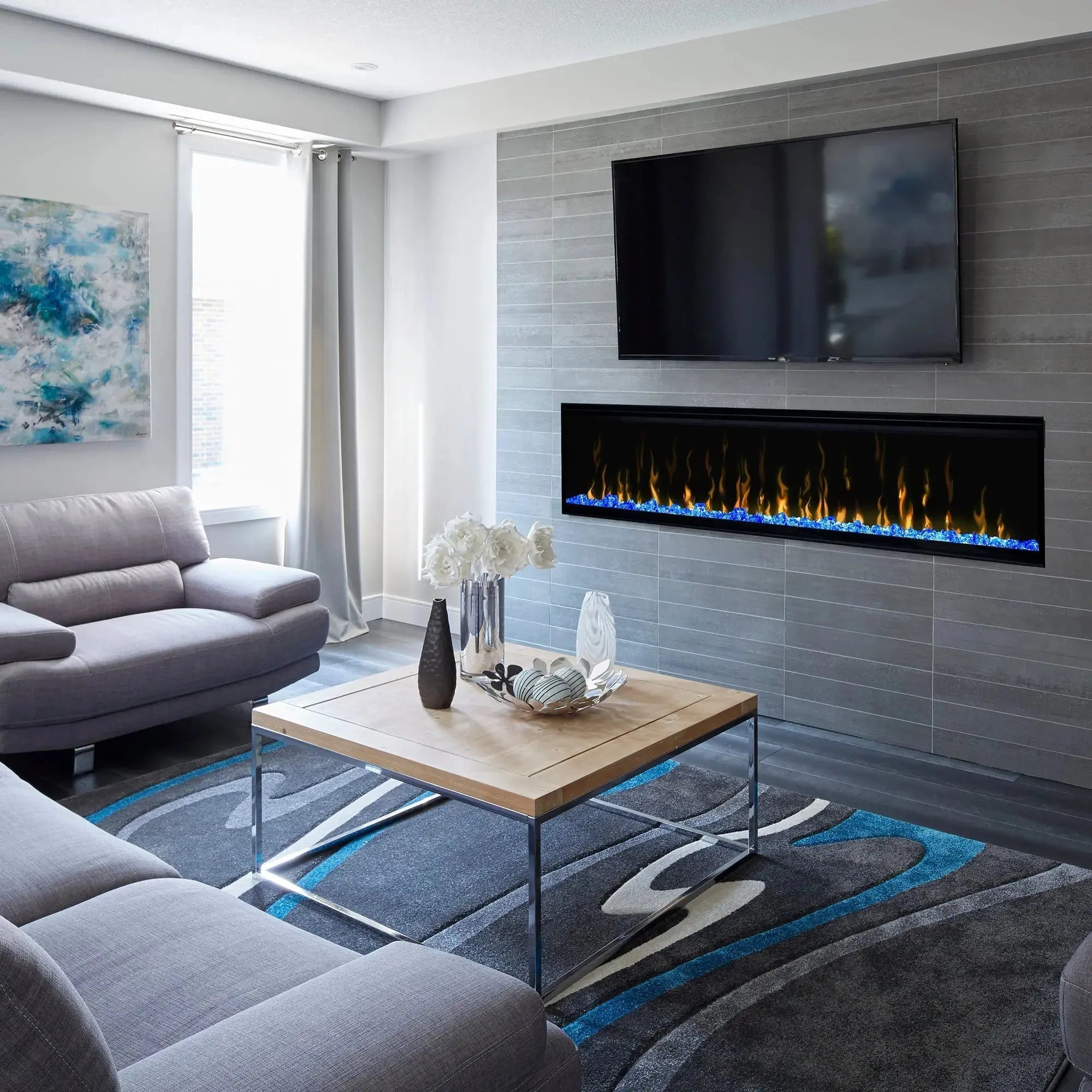
Gas and electric fireplaces both deliver warmth and ambiance without the work of burning wood, but they suit different homes. A gas fireplace produces real flames and higher, more consistent heat, making it the better primary heat source, while an electric fireplace installs almost anywhere with no venting, costs far less to buy and operate, and is the easier, safer choice for supplemental warmth and ambiance.
Choose gas for real flames and high, primary heat — at the cost of a gas line and usually venting. Choose electric for no-venting, plug-in installation, lower upfront and running costs, and a flame you can enjoy with or without heat.
The quick comparison
| Factor | Gas Fireplace | Electric Fireplace |
|---|---|---|
| Heat output | High — heats a large room as a primary source | Moderate — supplemental heat for one room |
| Flame | Real flame | LED flame effect (runs with or without heat) |
| Venting | Often required; ventless options exist | None — no chimney, flue, or gas line |
| Installation | Needs a gas line and usually venting | Plugs into a standard outlet or hardwires |
| Running cost | Tied to natural gas / propane prices | Low; like a space heater when heating |
| Upfront cost | Higher (unit plus installation) | Lower (unit, minimal install) |
| Power outage | Many models still produce heat | Will not operate without power |
Do electric fireplaces give off heat?
Yes. Electric fireplaces produce heat using an internal heating element and a fan that pushes warm air into the room. A typical 1,500-watt model heats roughly 400 to 1,000 square feet, which makes it well suited as supplemental heat for a living room, bedroom, or office. One advantage over gas: the LED flame effect can run with the heat off, so you get the look of a fire year-round, even in summer.
Do electric fireplaces use a lot of electricity?
No, not for what they deliver. Most electric fireplaces draw about 1,500 watts on the heat setting — the same as a standard space heater — which costs only a few cents per hour to run in most areas. With the heater off and only the flame effect on, power use drops to a tiny fraction of that. Because nearly all of the energy converts directly to heat in the room, electric fireplaces are highly efficient as supplemental heaters.
How much does it cost to run a gas fireplace?
Running cost for a gas fireplace depends on your local natural gas or propane price and the unit's BTU rating, but most homeowners spend somewhere in the range of a quarter to a dollar per hour of use. Gas delivers more heat per hour than electric, so the higher output can be worth the cost when you are heating a larger space or relying on the fireplace as a primary heat source.
Do electric fireplaces need to be vented?
No. Electric fireplaces require no venting, no chimney, and no flue, because they produce no combustion and no exhaust. This is their single biggest installation advantage: they can go almost anywhere there is an outlet, including interior walls, basements, condos, and apartments where running a vent would be impractical or impossible.
Does a gas fireplace need a chimney?
Not necessarily. Direct-vent gas fireplaces vent through an exterior wall rather than a traditional chimney, and ventless (vent-free) models require no venting at all. A gas line is still needed for any gas fireplace, so installation is more involved than an electric unit, but a full masonry chimney is no longer a requirement for most modern gas models.
Are electric and gas fireplaces safe?
Both are safe when properly installed and maintained. Electric fireplaces have no flame, no fumes, and surfaces that stay relatively cool, which makes them a popular choice for homes with children or pets. Gas fireplaces use a real flame, so they include safety features like oxygen-depletion sensors on ventless models, and the glass front gets hot during use. For peace of mind with gas, professional installation and an annual inspection are recommended.
Can you replace a gas fireplace with an electric one?
Yes, and it is a common upgrade. An electric fireplace insert can be fitted into an existing gas or wood fireplace opening, letting you keep the surround and mantel while eliminating gas costs, venting, and combustion. Converting from gas to electric is popular for homeowners who want lower running costs, simpler maintenance, and the ability to enjoy the flame effect without heat. Be sure to cap the gas line professionally before installing an electric insert.
Which fireplace is right for you?
Easy & efficient
You want no-venting installation, lower upfront and running costs, a flame you can enjoy without heat, and a safer surface for kids and pets.
Real flame & heat
You want real flames, higher and more consistent heat, and a unit capable of serving as a primary heat source for the room.
Still comparing? Browse all fireplaces to see the full range. As an authorized dealer for every brand we carry, AQVINA offers genuine products, full manufacturer warranties, and specialist support to help you choose the right model for your space.
Find your perfect fireplace
Explore electric and gas fireplaces from the brands homeowners trust — genuine units, full warranties, free shipping, and no sales tax at AQVINA World.
Shop All Fireplaces