
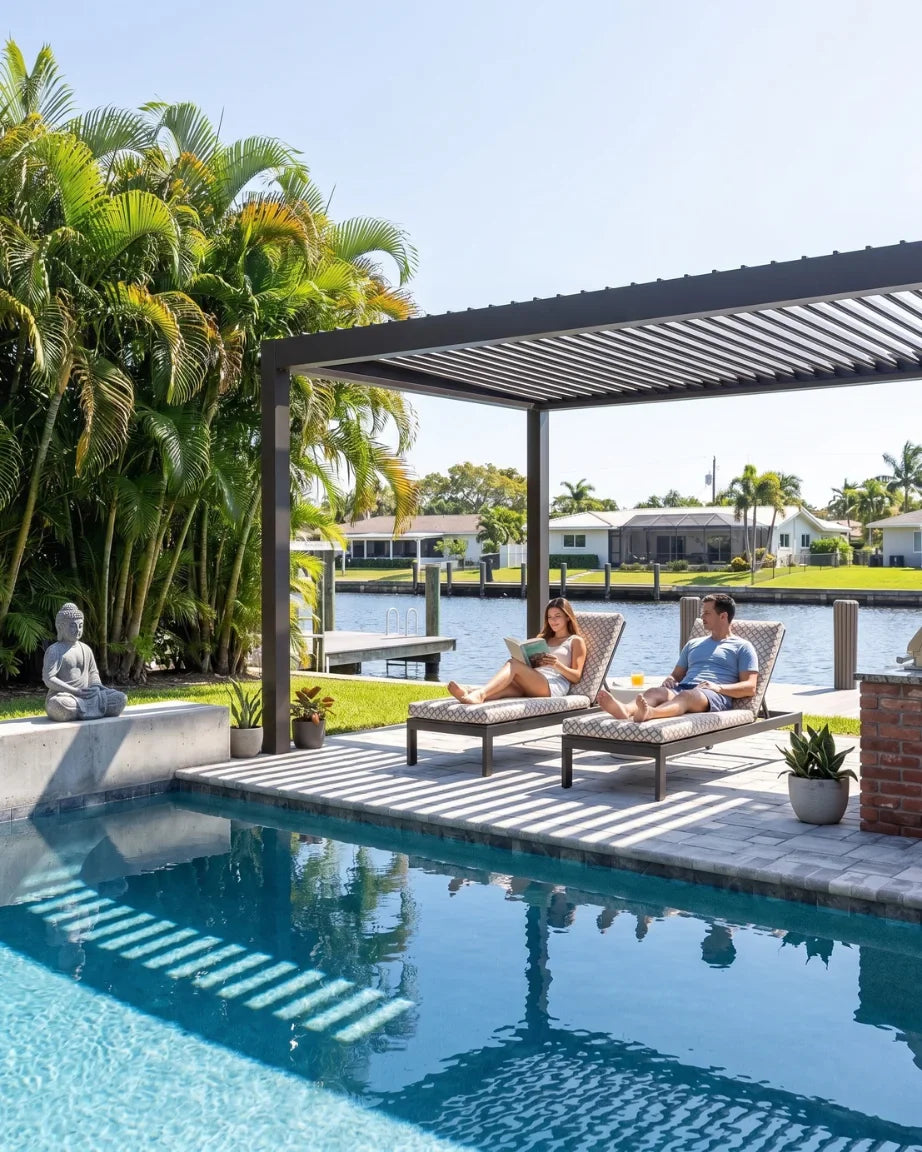

Benefits of Installing a Patio Roof
You've planned the perfect Saturday BBQ, but intense mid-day sun quickly forces your guests inside. An outdoor patio cover isn't just a structural addition; a solid patio roof acts as an insurance policy for those weekend plans. If you're considering the Benefits of Installing a Patio Roof, think of a practical patio overhang or roof as a dependable way to protect your plans and your space.
According to real estate experts, homeowners often treat their property as a fair-weather luxury, leaving valuable square footage completely wasted. Think of a backyard cover like an exterior living room, transforming an underused concrete slab into a comfortable environment you can actually enjoy 365 days a year. As you explore outdoor patio cover ideas, even a simple patio cover idea can reimagine how you use this area.
Rather than viewing this improvement as a stressful construction project, consider it a permanent lifestyle upgrade. A well-designed patio roof or patio covers allow you to easily reclaim your space from an unpredictable forecast.
Summary
A solid patio roof converts underused outdoor areas into year-round living spaces, cuts heat at the source to keep patios 10–15 degrees cooler, and reduces indoor cooling costs. It shields furniture and decking from UV and rain, preventing fading and rot, while adding perceived square footage that can return around 70% ROI at resale. Selecting between wood, aluminum, or louvered systems—free-standing or attached—balances aesthetics with maintenance and function. Secure permits and choose DIY or professional installation to ensure safe, durable performance.
The 10-Degree Difference: Slashing Home Cooling Costs with Exterior Shade
Afternoon sunlight blasting through glass doors can quickly turn a living room into a sauna. Stopping that heat before it hits the glass is the secret to reducing home cooling costs with exterior shade. Think of a solid patio roof as a giant sun hat for your house. Whether you choose patio roof covers with shingles or a patio cover with metal roof, the goal is the same: stop heat at the source.
Upgrading to insulated patio roof panels takes this heat-blocking power further. These covers feature a thick foam core—acting exactly like the insulation in your walls—to create a true "thermal barrier." This kind of patio cover roofing maximizes both indoor and outdoor comfort through three simple factors:
Deflecting direct UV rays away from exposed windows.
Preventing concrete from absorbing and radiating heat into the house.
Trapping a pocket of cooler air underneath the canopy.
These energy-efficient outdoor patio covers and roofing solutions dramatically boost your backyard's usable hours per year. When the patio stays 10 to 15 degrees cooler, sweltering summer afternoons suddenly become perfectly comfortable for relaxing outside. Beyond just managing temperatures, this permanent physical barrier also sets the stage for weather-proofing your investment, protecting your furniture and decking from the elements year-round.
Weather-Proofing Your Investment: Protecting Furniture and Decking
Watching expensive seat cushions fade from vibrant navy to a chalky blue in a single summer is a frustration every homeowner knows. Constant sunlight causes UV degradation, a process that slowly bakes fabrics and plastics until they eventually crack and tear. Solid patio covers act as a permanent, reliable shield, effectively protecting outdoor furniture from sun and rain damage year-round.
Beyond saving your favorite lounge chairs, these overhead structures excel at preventing deck water damage. As dependable deck covers for rain, they function as practical deck coverings that redirect pouring moisture away from your flooring boards and the underlying joists—the hidden horizontal support beams holding everything up. Keeping these critical structural pieces dry stops the slow, costly spread of wood rot dead in its tracks. If your seating area extends to the entry, a wood porch cover can deliver the same protection up front.
This level of defense transforms your backyard into a completely weatherproof entertainment space. You will never again have to sprint outside to rescue pillows during a sudden drizzle. By preserving your physical assets and upgrading your daily lifestyle, a durable cover naturally sets the stage for a much larger financial benefit: boosting your home's overall appraisal value.
Boosting Appraisal Value: A High-ROI Home Improvement
Most buyers evaluate a home based on livable space, not just interior dimensions. When appraisers step outside, a permanent roof transforms an exposed paved surface into what the real estate industry calls "perceived square footage." Unlike a flimsy canvas awning, a fixed structure visually extends your home's footprint, making the entire property feel much larger and significantly more functional.
If you are wondering exactly how much value a covered patio adds, the math strongly favors this investment. While interior remodels can yield mixed financial returns, increasing property resale value with outdoor additions is highly reliable. Consider the average return on investment (ROI) for popular home upgrades:
Covered Patios: ~70% ROI
Major Kitchen Remodels: ~55% ROI
Standard Room Additions: ~50% ROI
This impressive financial benefit hinges entirely on choosing lasting structural upgrades. A solid roof elevates your exterior aesthetic—often called curb appeal—signaling to appraisers that the space is a true extension of the house rather than a temporary fix. To capture this full value, you must select durable materials that align with your home's architecture and your lifestyle.
The 'Right Fit' Guide: Deciding Between Wood, Aluminum, and Louvered Systems
Choosing the right material comes down to how you plan to use the space and your tolerance for upkeep. If you want dappled sunlight, a patio cover pergola with an open-slatted roof is a popular choice, though it won't stop rain. Many pergola patio covers blend shade and style beautifully. For true all-weather protection, you need a solid cover. A traditional wooden patio cover offers timeless beauty, but it requires regular staining to prevent rot; wooden patio covers are gorgeous but higher maintenance.
Many homeowners skip that heavy upkeep by exploring low-maintenance aluminum patio cover options. Products like Alumawood mimic the rich texture of timber without the constant painting. If you want both sunshine and shelter, you should compare louvered roof systems vs. fixed covers. Think of louvers as adjustable blinds for the sky; these rotating metal slats open to catch a breeze or lock tightly shut during a sudden downpour.
Decide early whether you prefer a free standing patio cover that creates a covered free standing patio anywhere in the yard, or a wall mounted patio cover that connects to the house. In some designs, a patio cover attached to roof lines offers the cleanest look. If you like a warm, natural finish, choose a patio awning wood style; if durability is the priority, consider metal or composite options.
Your final selection ultimately balances your dream aesthetic with your weekend free time. Careful material selection ensures your new space meets your practical needs while elevating your backyard's design.
Building Your Outdoor Sanctuary: Next Steps from Planning to Permitting
Instead of letting intense heat or sudden drizzle dictate your weekend plans, a covered patio allows you to permanently reclaim your outdoor living space.
Before building, always check local permitting requirements for attached shade structures. This crucial step ensures your new addition guarantees safe, long-term sturdiness and protects your home's resale legality. Next, weigh a DIY patio cover kit vs. professional installation. While DIY kits work beautifully for basic, straightforward shade, hiring professionals is the smartest route for handling the heavy lifting of complex, weather-tight designs.
For inspiration and planning, browse ideas patio covers galleries and front porch covers ideas, then refine your shortlist of patio covering options. You can compare an outdoor patio cover to a more substantial deck cover to see what best fits your layout.
To finally bring this project to life, follow this simple timeline:
Research how to choose the right patio roof design for your home's style.
Secure your permits or hire a qualified contractor who handles the paperwork.
Schedule the date for your first rain-proof outdoor gathering.
Start planning your design today, and watch your unused patio transform into your family's favorite room outside the house.
Frequently Asked Questions
Question: How does a solid patio roof help lower indoor temperatures and cooling costs?
Short answer: By stopping heat before it reaches your home. A solid patio roof acts like a sun hat, blocking direct sunlight from blasting through glass doors. Insulated roof panels go further by creating a true thermal barrier, similar to wall insulation. Together they: deflect UV away from windows, keep concrete from absorbing and radiating heat into the house, and trap a cooler air pocket under the canopy. The result is a patio that’s typically 10–15 degrees cooler and a home that requires less air conditioning.
Question: How does a patio roof protect outdoor furniture and decking?
Short answer: It provides a permanent shield against UV and rain. Constant sun fades fabrics and degrades plastics, while rain accelerates wear and rot. A solid cover blocks UV to prevent fading and cracking, and it redirects water away from deck boards and the underlying joists—the structural members most vulnerable to moisture. Keeping these components dry halts the slow spread of wood rot and turns the area into a truly weatherproof entertainment space.
Question: Will adding a covered patio increase my home’s value?
Short answer: Yes—by creating “perceived square footage” and strong ROI. Appraisers view a permanent roof over an outdoor area as an extension of livable space, not just an exposed slab. Compared with other upgrades, covered patios average around a 70% ROI, outperforming major kitchen remodels (~55%) and standard room additions (~50%). To capture this value, choose durable, lasting materials that elevate curb appeal and clearly read as a fixed, integrated structure.
Question: What’s the right material or system: wood, aluminum, pergola, or louvered?
Short answer: Match the choice to your weather needs and maintenance tolerance. For all-weather protection, pick a solid cover; pergola-style slats give dappled light but won’t stop rain. Wood offers timeless warmth but needs regular staining to prevent rot. Aluminum options (like wood-look products) mimic timber with far less upkeep. If you want flexibility, louvered roofs function like adjustable blinds—open for sun and airflow, close tightly for sudden showers. Also decide early between free-standing (place anywhere) and attached designs (clean, integrated look on the house).
Question: Do I need permits, and should I DIY or hire a pro?
Short answer: Check local permitting first, especially for attached structures—permits ensure safety, durability, and resale legality. DIY kits can work well for basic shade projects, but complex, weather-tight designs are best handled by professionals who can also manage paperwork. A simple path is: choose a design that fits your home’s style, secure permits or hire a contractor who will, then schedule your first rain-proof gathering once installation is complete.